
Updated March 06, 2026
Creators spend months filming content, building their curriculum, and polishing their brand, then they hit publish and hear nothing. Mobile apps lose 77% of daily active users within the first three days, and 90% churn by day 30. The code is rarely the problem. The launch strategy almost always is.
This guide covers the nine specific mistakes that kill download momentum for creator and coach apps, with a clear fix for each one. If you run an online program, fitness challenge, or coaching membership and want to move your audience off "rented land" and into a branded app you own, this is your anti-flop playbook.
Mistake 1: Building in silence without a pre-launch waitlist
The trap: Waiting until your app is live to start marketing it. With no existing demand, Day 1 produces zero downloads, zero reviews, and zero App Store ranking signals.
The fix: Start your "velvet rope" campaign at least 30 days before your iOS and Android builds go live. Post about the app's transformation promise on social, not its features. Collect emails from people who want early access.
With Passion.io, your web app goes live in weeks while your iOS and Android submissions are under review. Use that window to share your app link and start onboarding your first users before a single store listing is approved. The program launch tips guide covers how to build a pre-launch sequence that converts.
A founding member offer, for example a discounted annual subscription locked at launch price, turns passive interest into committed sign-ups. Target at least 100 waitlist members before you submit to stores. That number gives you enough demand to generate early reviews, which feed your ASO ranking from day one.
Mistake 2: Relying on social algorithms for distribution
The trap: Assuming your Instagram or TikTok following will automatically migrate to your app. Instagram organic reach averages just 3.5% of a brand's followers, and Facebook's 1.65% organic reach is even lower. More than 96% of your audience may never see your download announcement.
The fix: Treat social as a billboard, not a delivery channel. Your job is to move followers into your owned ecosystem, meaning your app, your email list, and your push subscriber base.
Run a free 5-day challenge that requires the app to participate. This forces the migration. Once a user is inside your app with push notifications enabled, you reach them directly without competing for algorithm visibility. Think of your social channels as the signposts that point back to the home base you own.
Mistake 3: Neglecting app store optimization (ASO)
The trap: Naming your app after yourself or your brand with no supporting keywords in the description. 67% from app store search accounts for the majority of all app downloads. When users search "yoga for runners" and your app is listed as "Founder's Wellness Space," they will never find you.
The fix: Research keywords your target audience already uses before you write a single word of your app store listing. Passion.io's help center covers five free ASO tools for your niche, along with a complete ASO guide for getting your listing found.
Your app name, subtitle, and first three lines of your description carry the most weight with store algorithms. Write those around a specific transformation, such as "30-Day Aerial Arts Program for Beginners," rather than a brand name alone. The help center also includes a dedicated app description guide covering exactly how to structure your copy for downloads.
For Expand and Plus plan users, App Store listing support is included, which removes a significant execution risk at submission.
Mistake 4: Launching without a retention loop (push + community)
The trap: Earning downloads but losing most of those users in the first week because nothing pulls them back in. Under 2% retention at day 30 is typical for education apps, and generic course platforms without push notifications compound that problem significantly.
The fix: Install your retention loop before launch day, not after. That means two things: a push notification welcome sequence and an in-app community space.
Users who receive push notifications in their first 90 days show nearly 3x higher retention rates than those who receive none. Airship's push notification research shows that daily push notifications can raise 90-day iOS retention to 50%, up from 7% with no pushes at all. Passion.io creators who run a 30-day in-app challenge with twice-weekly push notifications report a 22% completion lift in 9 weeks. Target +15-30% completion in your first 90 days by scheduling your push cadence before you flip the launch switch.
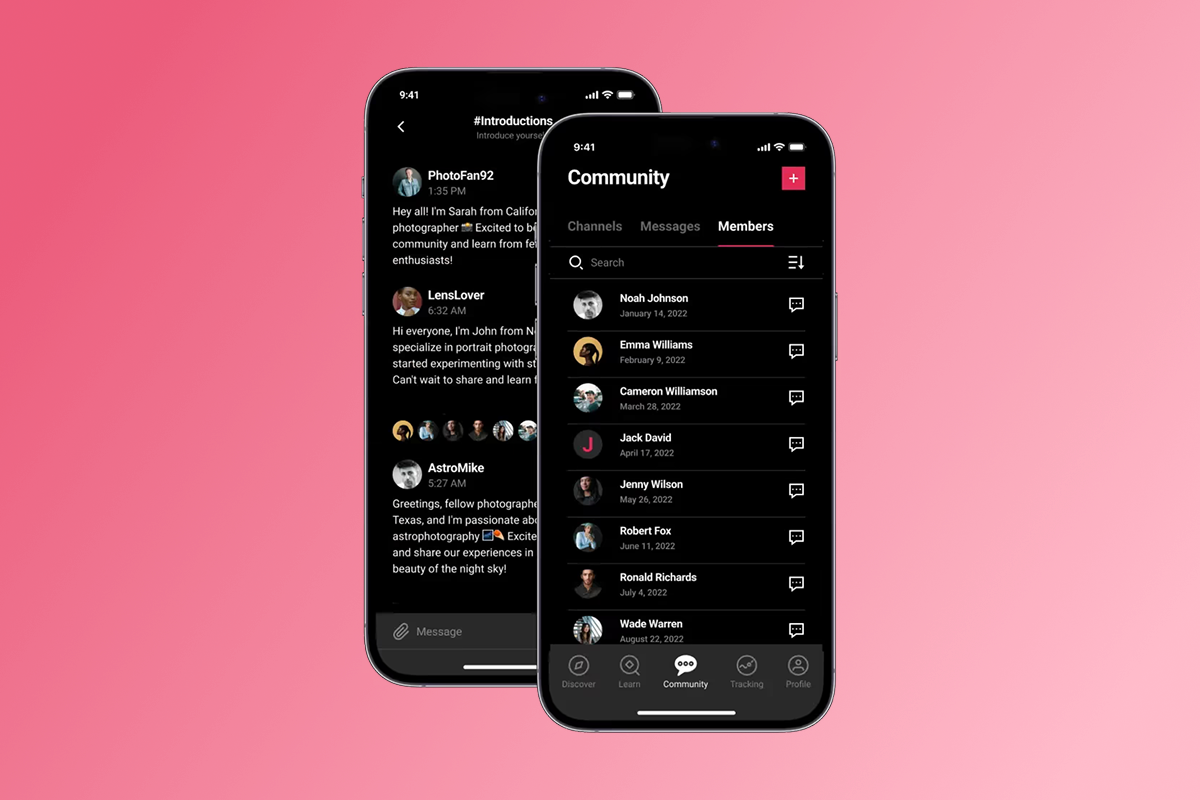
The community tab matters equally. Use the community building guide to set up a welcome thread, a weekly accountability post, and your first challenge space. Post something in the community on Day 1 so new users land in an active space, not an empty room.
Mistake 5: Overcomplicating the MVP and delaying launch
The trap: Trying to build a 40-module curriculum, three membership tiers, a podcast feed, and a live event calendar before you submit to stores. This pushes your launch back by months, burns your pre-launch momentum, and increases the risk that you surface to an audience that has moved on.
The fix: Launch with 10 core lessons and one community space, then iterate based on real user feedback. With a no-code builder, you can change content, add modules, and adjust pricing without resubmitting to the App Store for every update. Your v1 does not have to be Netflix. It has to be good enough to deliver your core transformation.
Build a 30-day content map before launch, upload your 10 strongest lessons, set one subscription tier, and submit. Expand from there once users tell you what they actually want next.
Mistake 6: Ignoring the "first 1,000 downloads" strategy
The trap: Believing that publishing the app is the marketing plan. No active acquisition strategy means you depend entirely on organic App Store discovery, which builds slowly and unpredictably.
The fix: Run a concrete 30-day marketing plan covering three channels: your existing email list, your social following, and direct outreach to peers or affiliates who serve the same audience. Personal founder emails to warm contacts tend to drive significantly higher conversion rates than cold outreach for new apps, because those readers already trust you and are more likely to have the problem your program solves.
Run a free 5-day challenge accessible only inside the app during launch week. This creates urgency, demonstrates value, and pushes download-intent users to act. Pair it with a "Founding Member" offer limited to the first 50 or 100 sign-ups. The social proof from your first cohort's results then drives referrals and App Store reviews, which feeds your ASO ranking over the following months.
Mistake 7: Misunderstanding IAP fees vs. web checkout margins
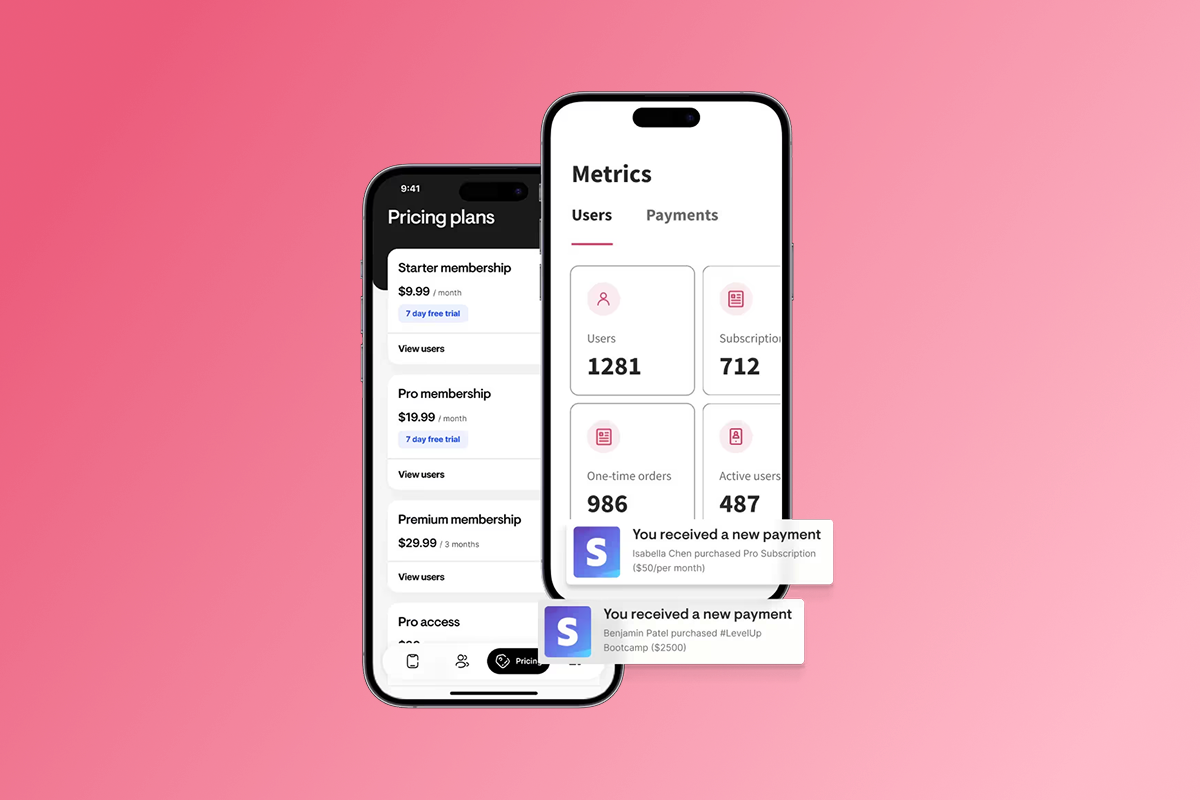
The trap: Setting up a $997 coaching bundle as an in-app purchase without realizing Apple takes 15-30% of every transaction. On a $997 sale, that is between $149 and $299 gone before you count taxes, platform fees, or Stripe.
The fix: The hybrid payment model routes high-ticket items through your web checkout and reserves in-app purchases for low-ticket, high-volume convenience products. Here is how the fee math works:
The Apple Small Business Program gives developers who earned under $1M in the prior year a 15% rate instead of 30%. Google Play applies the same reduced rate to your first $1M in revenue, as documented in Google's service fee policy. Both programs require you to qualify each year.
The PassionPayments fee breakdown shows a 3.9% platform fee plus standard Stripe processing, totaling around 6.8% per transaction. For a $997 bundle, the difference between web checkout and standard Apple IAP is over $230 per sale. At 50 sales per month, that gap is more than $11,000 per year. Use web checkout for core subscriptions and high-ticket bundles, and enable IAP for convenience on lower-price upsells where the frictionless mobile purchase experience justifies the cost.
Review the full Passion.io pricing breakdown and the IAP pricing guide when you configure your payment paths.
Mistake 8: Buying cheap installs to inflate download numbers
The trap: Using low-quality ad networks or install-farm services to boost your download count before launch. Fraudulent installs distort campaign data, leaving you unable to make accurate decisions about what is actually working. High download counts with near-zero engagement also send negative ranking signals to the App Store algorithm and can trigger store policy violations.
The fix: Focus on high-intent organic users from your existing audience. A genuine user who downloads your app because they already follow you on Instagram and opened three of your emails will complete more lessons, stay subscribed longer, and refer friends at exponentially higher rates than a fraudulent install. Fake installs harm app developers by making it impossible to understand which real channels are driving real growth.
If you want to accelerate paid acquisition, use Apple Search Ads or Meta with tight audience targeting. North America fitness CPI on iOS averages around $1.19, which is a manageable budget when your new users convert to $29/month subscribers.
Mistake 9: Treating your mobile app like a desktop website
The trap: Uploading 60-minute lecture recordings and 40-page PDF workbooks, then wondering why your users abandon lessons halfway through. Mobile users open apps between meetings, during commutes, and at the gym. Long-form, text-heavy content kills completion momentum on a small screen.
The fix: Structure your content for mobile-first consumption. Break long lessons into 5-10 minute segments, use audio-only versions for on-the-go listening, and enable offline downloads so users can access content without a data connection.
Drip content also improves completion. Rather than releasing your entire program at once, schedule lessons to unlock over days or weeks. This maintains a reason to return and prevents the overwhelm that causes abandonment. For mobile learners, building a daily habit of opening your app to find one new lesson works far better than presenting an intimidating 40-module library on day one.
You can watch how the creator app experience is structured inside Passion.io to see how content, community, and push work together in a mobile-first flow.
Comparison: Best channels to promote your app launch
Different channels carry very different trade-offs between cost, effort, and audience ownership. Use this table to prioritize your first 30 days.
The channels in the "high ownership" row build a direct relationship you keep regardless of platform policy changes. Organic reach decline data confirms that social reach has fallen year on year across every major platform, which means relying on any single social channel as your primary distribution path is a compounding risk. Use paid ads to scale what organic has already validated, not to replace the owned channels you should be building from day one.
The "launch safe" validation checklist
Run through this checklist before you submit to the App Store or flip your app live. Every unchecked item is a risk to your launch momentum.
Pre-launch audience:
- Pre-launch waitlist has at least 100 confirmed sign-ups
- Founding member offer is live on your web app
- Email launch sequence (3-5 emails) is scheduled and tested
- Social posts for launch week are drafted and scheduled
Technical and app store:
- Apple Developer Account is active ($99/yr annual fee paid)
- Google Play Developer Account is registered ($25 one-time fee paid)
- App store listing reviewed with keyword-optimized title, subtitle, and description (see ASO guide)
- All pre-submission requirements confirmed and completed
- Apple and Google rejection resolution guides bookmarked in case of review feedback
- Buffer of 1-2 weeks planned into your launch timeline for App Store review
Monetization:
- Web checkout (PassionPayments) configured for high-ticket products and core subscriptions
- IAP pricing set only for low-ticket mobile convenience purchases
- Fee paths confirmed: PassionPayments 3.9% + Stripe vs. Apple/Google 15-30%
Retention:
- Push notification welcome sequence is scheduled (Day 1, Day 3, Day 7 minimum)
- In-app community space is set up with a live welcome post
- 30-day challenge structure is ready for Month 2
Content:
- At least 10 core lessons are uploaded and organized
- Drip schedule is configured (do not release everything at once)
- Offline access is enabled for key lessons
Download the complete 30-Day App Launch Checklist with timeline, fee calculator, and ASO worksheet [TODO: insert checklist download link]. Use it to validate your readiness before you submit to stores.
Turn launch spikes into recurring revenue
Getting downloads is the starting line, not the finish. Every mistake in this list, whether a missing waitlist, an unconfigured push sequence, or a misrouted payment, reduces your conversion rate, increases churn, and limits the recurring revenue base that makes a creator business sustainable and predictable.
The creators who build lasting MRR own their audience from day one. They do not rent attention from algorithms. They build a direct line through push, community, and a branded mobile experience that users actually choose to open every day.
"I am blown away by how responsive the support team are, who hold you hand while also offering great marketing and skills advice as we go along." - Jane Mullins on Trustpilot
"I am excited for being given a cost-effective way to create an app so Shift Your Life teachings can reach more people to have the personal... transformation they desire." - Tracy Latz on Trustpilot
Passion.io gives you the no-code app builder, the push and community tools, the dual payment paths, and the Passion.io feature guide so you can focus on the launch strategy and the content rather than the technical plumbing. Expand and Plus plans include App Store listing support, which removes the biggest technical barrier for first-time app submitters.
Ready to launch without the tech headaches? Book a Passion.io demo to see how Passion.io handles the launch process, or try it with a 30-day money-back guarantee.
Frequently asked questions about app launch strategy
How do I get my first 1,000 app downloads?
Start with a pre-launch waitlist of at least 100 contacts from your email list and social following. Launch with a free 5-day challenge that requires the app to participate, pair it with a time-limited "Founding Member" pricing offer, and ask your first cohort for App Store reviews once they complete the challenge.
What is the best way to market an app launch?
A 30-day in-app challenge announced to your email list first consistently performs well because email converts at a higher rate than social media. Those subscribers already trust you. Social media amplifies reach but rarely converts at the same rate as a direct email from the founder.
How can I promote my app for free?
Migrate your existing email list and social following by offering exclusive access to a free challenge or bonus content inside the app. Personal emails to warm audience members and peer shoutouts in related communities cost nothing and typically drive the highest-quality downloads.
What fees does Apple or Google take on in-app purchases?
The Apple Small Business Program reduces the standard 30% rate to 15% for developers who earned under $1M in the prior calendar year. Google Play applies 15% to your first $1M in annual revenue and 30% beyond that. Google Play subscriptions are 15% regardless of revenue tier.
How long does App Store review take?
Apple's review process typically takes 24-48 hours for new apps, though rejections requiring revisions can add 1-2 weeks to your timeline. Plan a buffer into your launch schedule and review the Apple review process guide before you submit.
Do push notifications actually improve retention?
Yes, and the data is clear. Users who receive push notifications in their first 90 days show nearly 3x higher retention than users who receive none. Two targeted push notifications per week is a practical starting cadence during your first 90 days.
Key app launch terminology
App Store Optimization (ASO): The process of improving an app's visibility in the App Store or Google Play through keyword optimization in the app name, subtitle, description, and category selection. ASO is the app equivalent of SEO for websites.
In-App Purchase (IAP): A transaction processed directly inside an iOS or Android app through Apple or Google's payment system. Apple and Google retain 15-30% of each IAP transaction depending on your revenue tier and program eligibility.
Cost Per Install (CPI): The amount you pay in advertising for each user who downloads your app. Fitness CPI benchmarks on iOS in North America average around $1.19, though organic channels from an existing audience cost significantly less.
PassionPayments: Passion.io's built-in web checkout gateway, powered by Stripe. It charges a 3.9% platform fee per transaction plus Stripe's standard processing fees, totaling approximately 6.8% per transaction. Use PassionPayments for web-based purchases outside of the Apple or Google IAP system.
Daily Active Users / Monthly Active Users (DAU/MAU): The ratio of users who open your app on a given day versus a given month. A DAU/MAU ratio above 20% is considered healthy for a content or coaching app. Push notifications and in-app challenges are the primary levers for improving this ratio.
Churn: The percentage of paying subscribers who cancel within a given period. Monthly churn above 6% signals a retention problem that typically requires a stronger onboarding sequence, regular push notifications, and an active in-app community to fix.